Choosing the Right Attic Insulation
The best insulation for your attic depends on several factors including your climate, budget, existing insulation condition, and performance goals. In Tennessee's Climate Zone 4, the recommended attic R-value is R-38 to R-60. Achieving this with minimal thickness requires high-performance materials like spray foam insulation.
Each insulation type has specific advantages. Spray foam excels in air sealing and moisture control. Blown-in cellulose fills irregular spaces well and uses recycled materials. Fiberglass batts are affordable and easy to install for DIY projects. Understanding these differences helps you make the right choice for your Franklin-area home.
Climate Considerations for Tennessee
Tennessee's climate combines hot, humid summers with cold winters, creating unique demands on attic insulation. In summer, attic temperatures can exceed 150°F, and the radiant heat load on your ceiling drives up cooling costs. In winter, warm air rising through attic air leaks increases heating expenses.
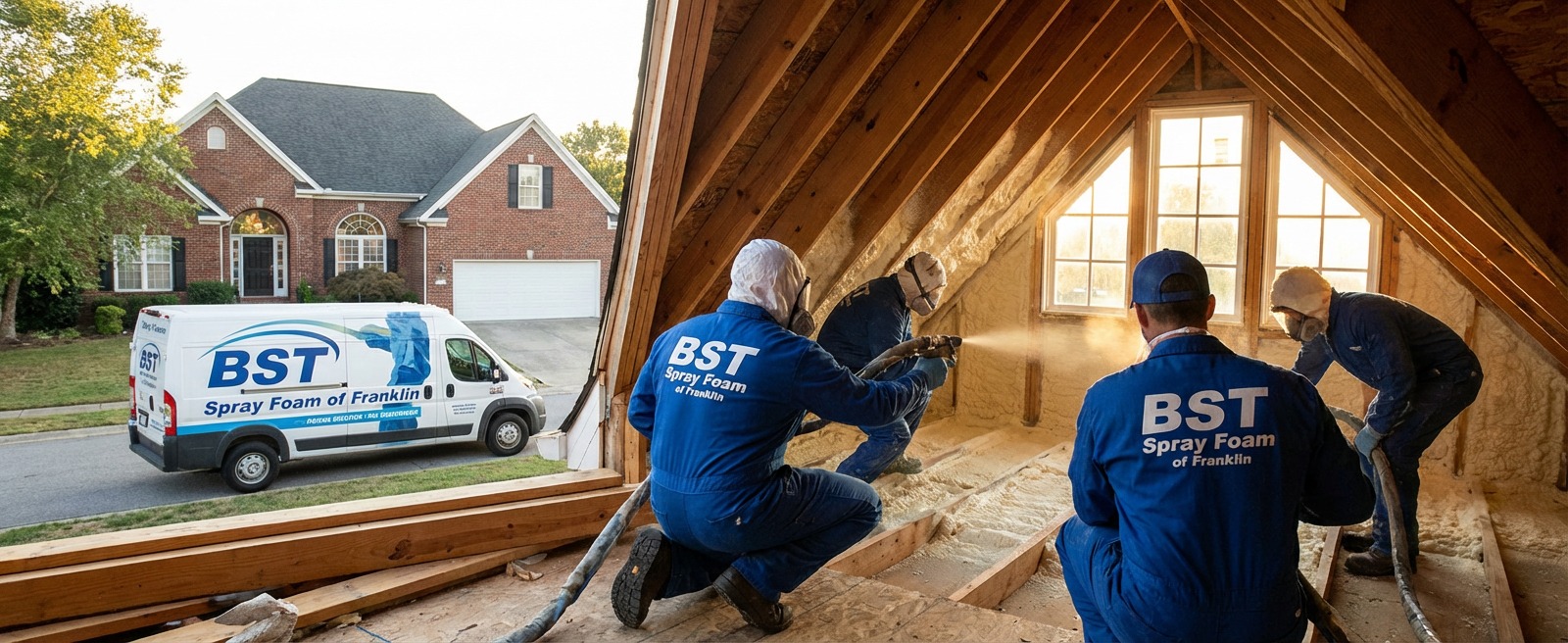
Spray foam insulation addresses both extremes effectively. Applied to the roof deck, it keeps attic temperatures much closer to the conditioned space below, reducing HVAC workload year-round. For Franklin, Brentwood, and Nolensville homeowners, this translates to meaningful energy savings and improved comfort on both the hottest and coldest days.
Professional Installation vs. DIY
While fiberglass batts and some blown-in products can be installed by homeowners, spray foam insulation requires professional installation. The equipment, safety precautions, and expertise needed for proper application make it a job for trained installers.
Professional installation ensures proper coverage, correct thickness, and adherence to building codes. At BST Spray Foam of Franklin, our certified installers assess your attic's unique conditions and apply insulation with precision, ensuring you get the full performance benefit of your investment. Call 629-245-2588 for a free estimate.